
You think you know. You don’t.
The GOAT of sitcoms isn’t funny.
I mean, it is. It’s a laughing riot. But that’s the last reason it’s the GOAT.
This show was ahead of its time in ways that still feel uncomfortable to admit. It took the most mundane things — waiting for a table, losing a parking spot, returning a library book — and made them more interesting than any wedding, promotion, or dramatic breakup ever could be.
It also admitted something most shows still refuse to: people are petty, selfish, and neurotic. Not occasionally. Constantly. And it never apologized for that.
The funny didn’t come from one liners. It came from the writing, the structure, the plotting — the whole architecture of the thing.
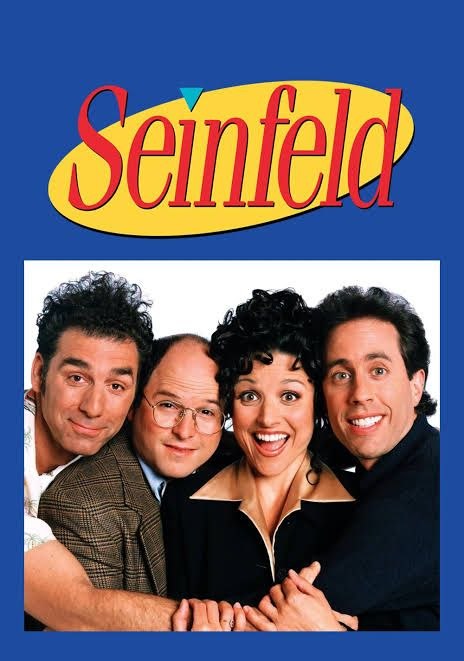
The show is Seinfeld.
Half the shows you love today exist because of one show. Friends, The Big Bang Theory, How I Met Your Mother — all of them owe something to it. The “about nothing” format, the group of friends as family, the mundane moment as storyline. They all came from the same place.
And here’s the range of it: there’s an episode in How I Met Your Mother — Season 5, Episode 4 — called The Sexless Innkeeper. A whole episode built around one social concept. Seinfeld did that in its very first episode. In 1990.
That’s not influence. That’s a blueprint.
And if you think you already know why it’s great, you probably don’t.
Why I Didn’t Write Everything
If there wasn’t the concept of spoilers, I would have gone through all nine seasons episode by episode and shown you exactly why this show is what it is.
But that’s for you to discover. To laugh like you’re crazy. To maybe pee a little.
So I picked three.
And picking three was its own problem. Every time I settled on one, another episode would show up in my head like — really? You’re leaving me out? I showed restraint. I left out some of my favourite episodes entirely. Those are reserved for after you’ve watched — so we can talk about them properly.
For now, these are the three.
1. The Contest( Season 4, episode 11)
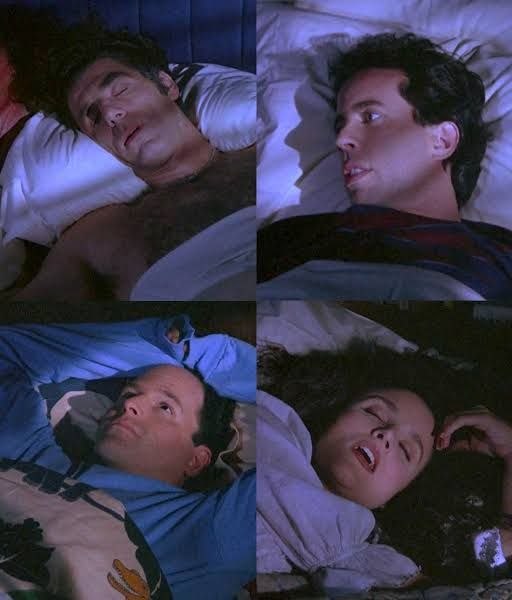
This episode starts with George’s mother catching him in a private moment.
That’s it. That’s the setup.
George’s mother walks in, and what she says next is one of the funniest lines in the entire episode. Something about her son treating his body like an amusement park.
I’ll leave it at that.
He tells the group. Swears he’s done. Never again. And somehow, that becomes a bet. Who can last the longest without pleasuring themselves. Elaine joins at one and a half times the stake — for obvious reasons.
Now here’s where the genius is.
Because of television restrictions at the time, they couldn’t say the word. Not even close to the word. So the writers built an entire episode around implication. Around phrases like “master of my domain” and “queen of the castle” and “king of the county.” You never hear what the contest actually is. But you know exactly what it is.
That restriction didn’t limit the episode. It became the episode.
And the other thing — the show trusted its audience completely. It didn’t explain the joke. It didn’t dumb it down. It just placed the implication in front of you and assumed you’d get it.
That trust is rare. And it’s the cherry on top of what is already a masterclass in writing around a constraint.
Funny and genius. At the same time.
2. The Merv Griffin Show( Season 9, episode 6)
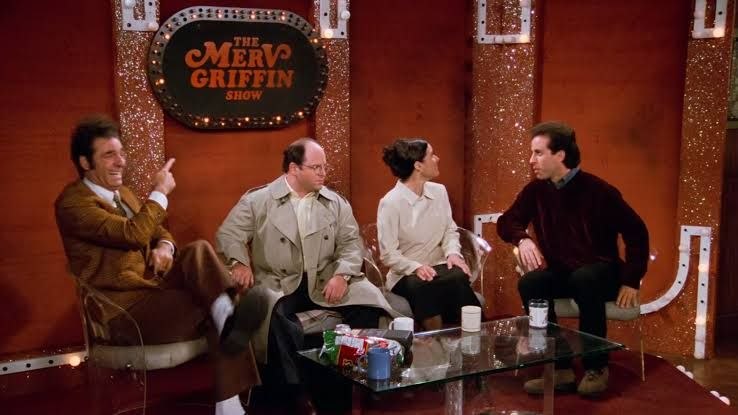
This one is about architecture.
It starts simply enough. Kramer finds the original set of the Merv Griffin Show in a dumpster. Takes all of it home. Sets it up in his apartment. And just starts hosting a talk show, with Jerry, George, Elaine, and Newman as guests.
That alone is already absurd enough to be funny.
But then the other two stories start running alongside it.
Jerry is dating a woman with an extraordinary toy collection. Every kind of toy imaginable. But she won’t let him touch any of it. So naturally, he starts drugging her to play with the toys while she’s out. George finds out. Joins in. Then Elaine finds out and is horrified. Says it’s cruel. Wrong. Completely unacceptable.
Then Jerry mentions the easy bake oven.
She’s in.
Meanwhile George, while driving, refuses to swerve for a pigeon because of an understood agreement between humans and pigeons. They have a deal. Then a squirrel doesn’t move in time, he swerves, injures it, and spends the rest of the episode nursing it back to health.
Three completely separate, completely ridiculous stories.
Then Kramer, sensing the show needs more energy, asks Newman about new guests. Newman points him toward an animal handler with an eagle. George hears about it and barges in, planning to hand the squirrel over. Jerry’s girlfriend gets invited on to discuss the drugging. The eagle attacks the squirrel. Jerry gets exposed. Everything explodes at once.
That’s the Seinfeld structure at its best. Three fuses. One bomb. The chaos arrives exactly on time.
This kind of convergence becomes a signature of the later seasons. And this episode is one of the clearest examples of why it works.
3. The Betrayal( Season 9, episode 8)
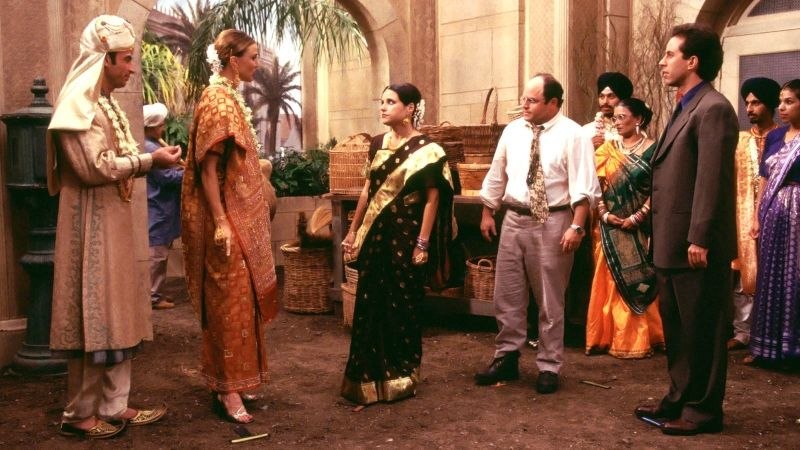
This one is the boldest experiment in the show.
The entire episode runs backward.
Not in a confusing way. Not as a gimmick. The story simply moves in reverse chronological order, and the writers had to build every single joke to work that way. The punchline comes first. The setup comes after. Which means the entire episode had to be reverse engineered from the ending before a single scene could be written.
That’s an extraordinary technical achievement.
Most shows wouldn’t attempt it. And the ones that do usually lean on the novelty — look how clever we are. Seinfeld didn’t do that. It found the structure, made it funny, and trusted the audience to follow.
That’s why this episode still feels modern. Not because it made people laugh, though it did. But because it kept asking a question most shows never bother with: how else can a story be told?
Nine seasons. And they were still experimenting.
That’s the real reason it’s the GOAT.
Why It Still Matters
Seinfeld is not for everyone.
If you need a show to make you feel good about people, this isn’t it. If you need characters to grow, learn lessons, and become better versions of themselves, this really isn’t it.
But if you’ve ever waited too long for a table and felt your entire personality shift. If you’ve ever done something petty and immediately justified it to yourself. If you’ve ever watched someone else make an obviously terrible decision and thought — yes, correct, I would have done the same.
This show is for you.
It ran for nine seasons without a single big moment. No weddings that saved the show. No deaths that broke the internet. No promotions that made you cry. Just people, being exactly as small and ridiculous as people actually are.
And you will laugh. Every episode, across all nine seasons, there is a laugh waiting for you. Sometimes loud. Sometimes the kind that sneaks up on you. Sometimes the kind where you have to pause and sit with what just happened.
But here’s the thing. When you finish it — when you’ve watched all of it — the laughing won’t be what stays with you.
What stays is the writing. The concepts. The structure. The sheer audacity of building something this precise out of absolutely nothing. You’ll realise the funny was never the point. It was just the most obvious thing on the surface.
Underneath it was something else entirely. Something that took nine seasons to fully show itself.
Watch it. Then come find me.
We’ll talk.
Keep the Story Going ☕